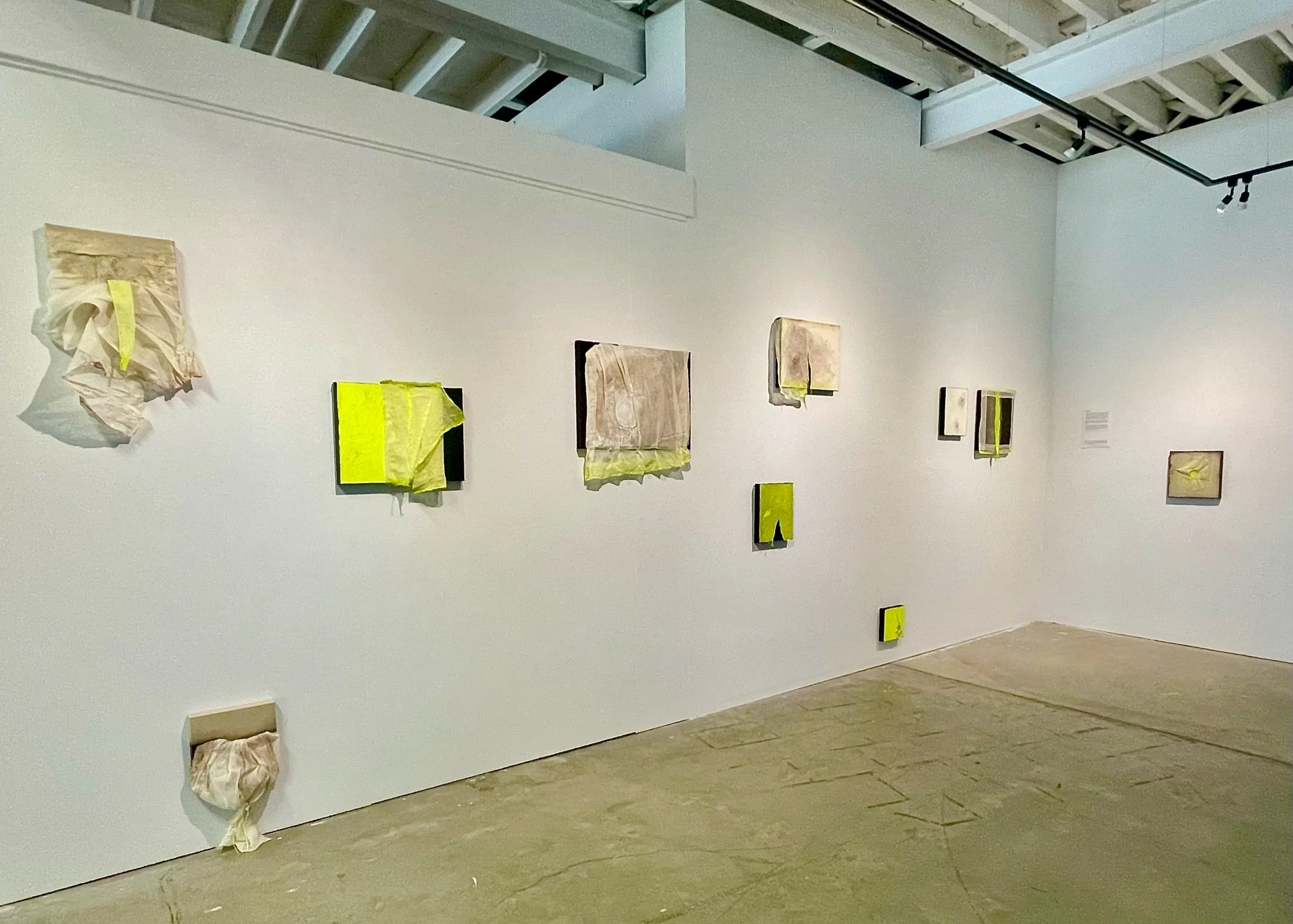
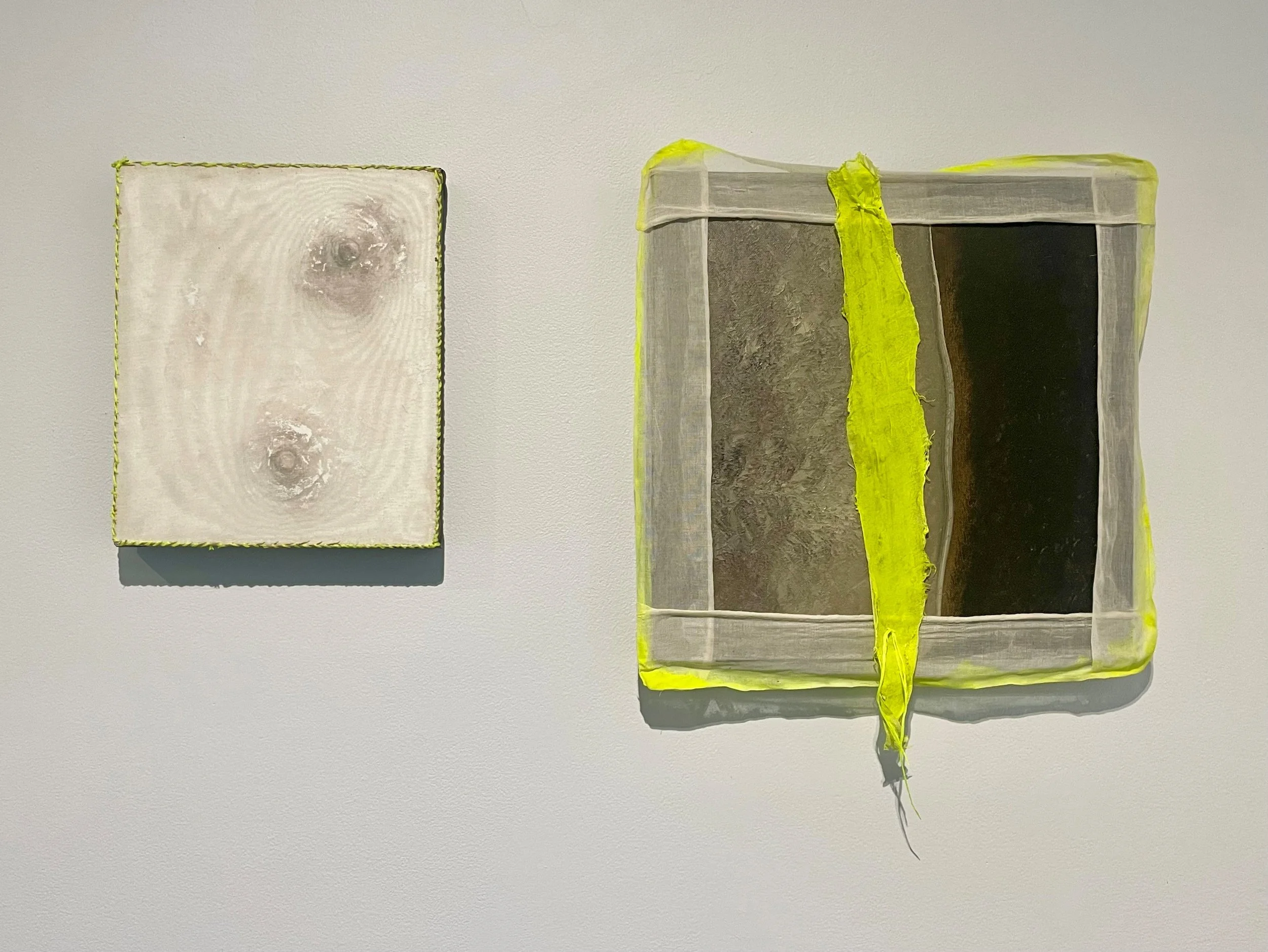
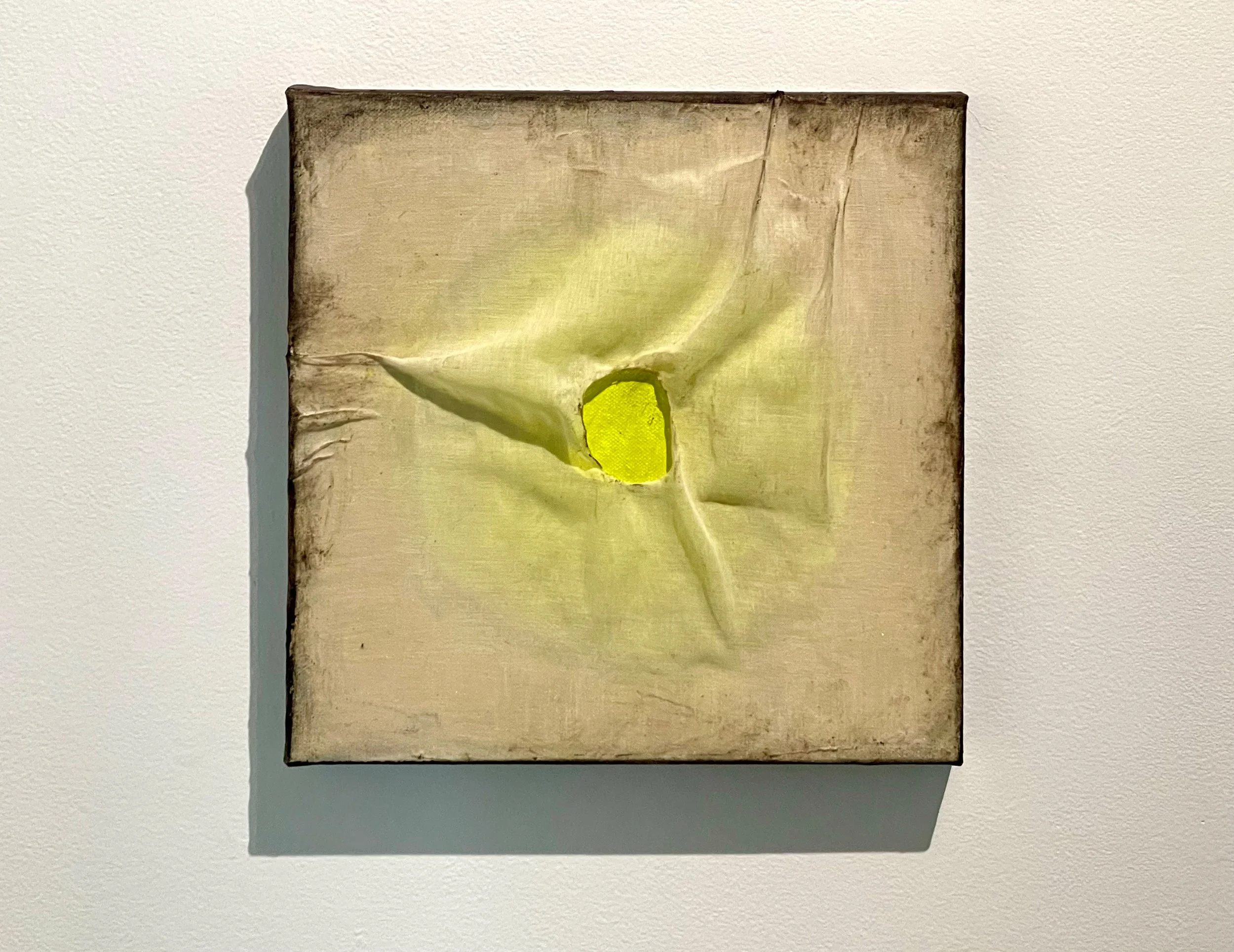
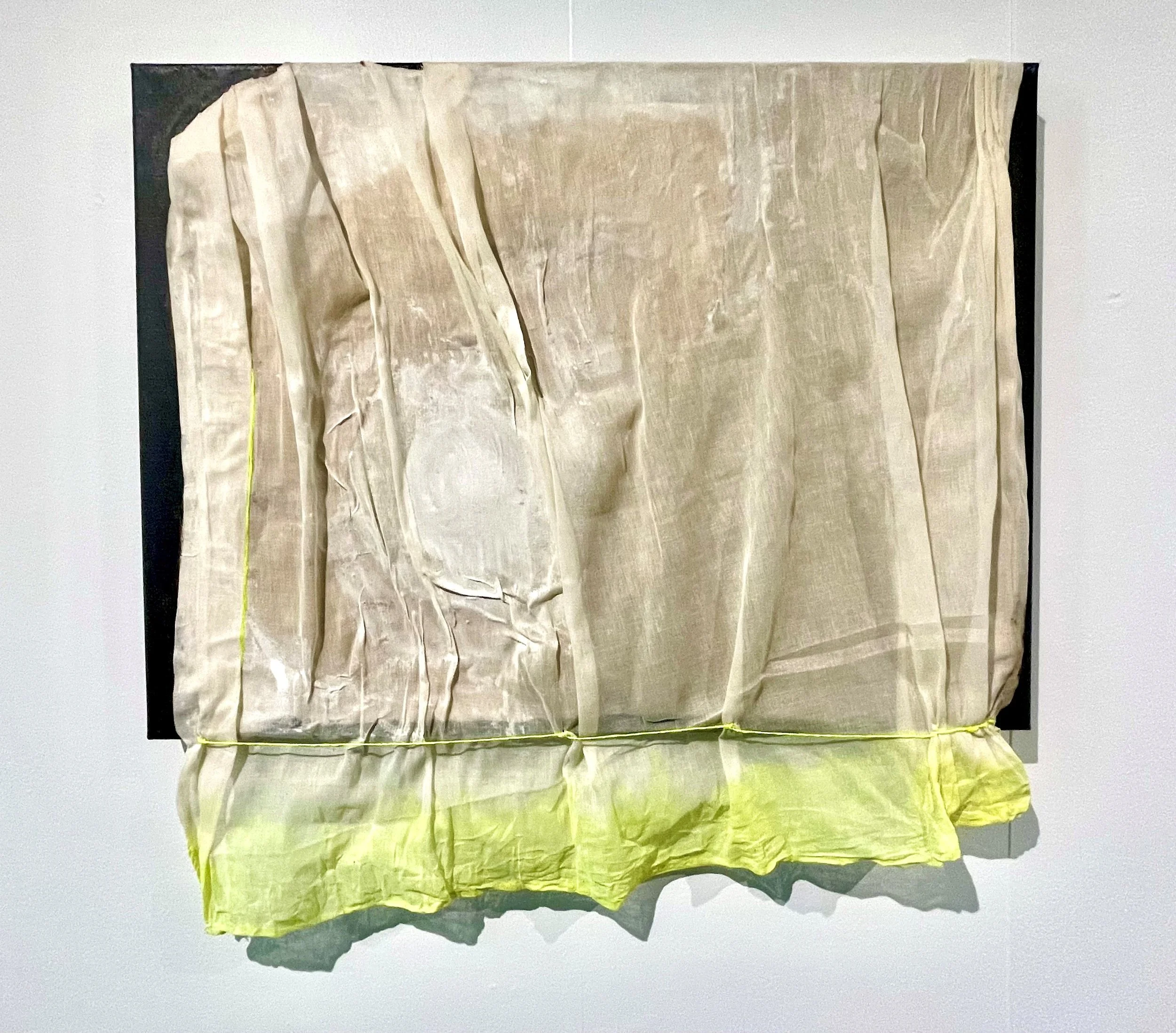
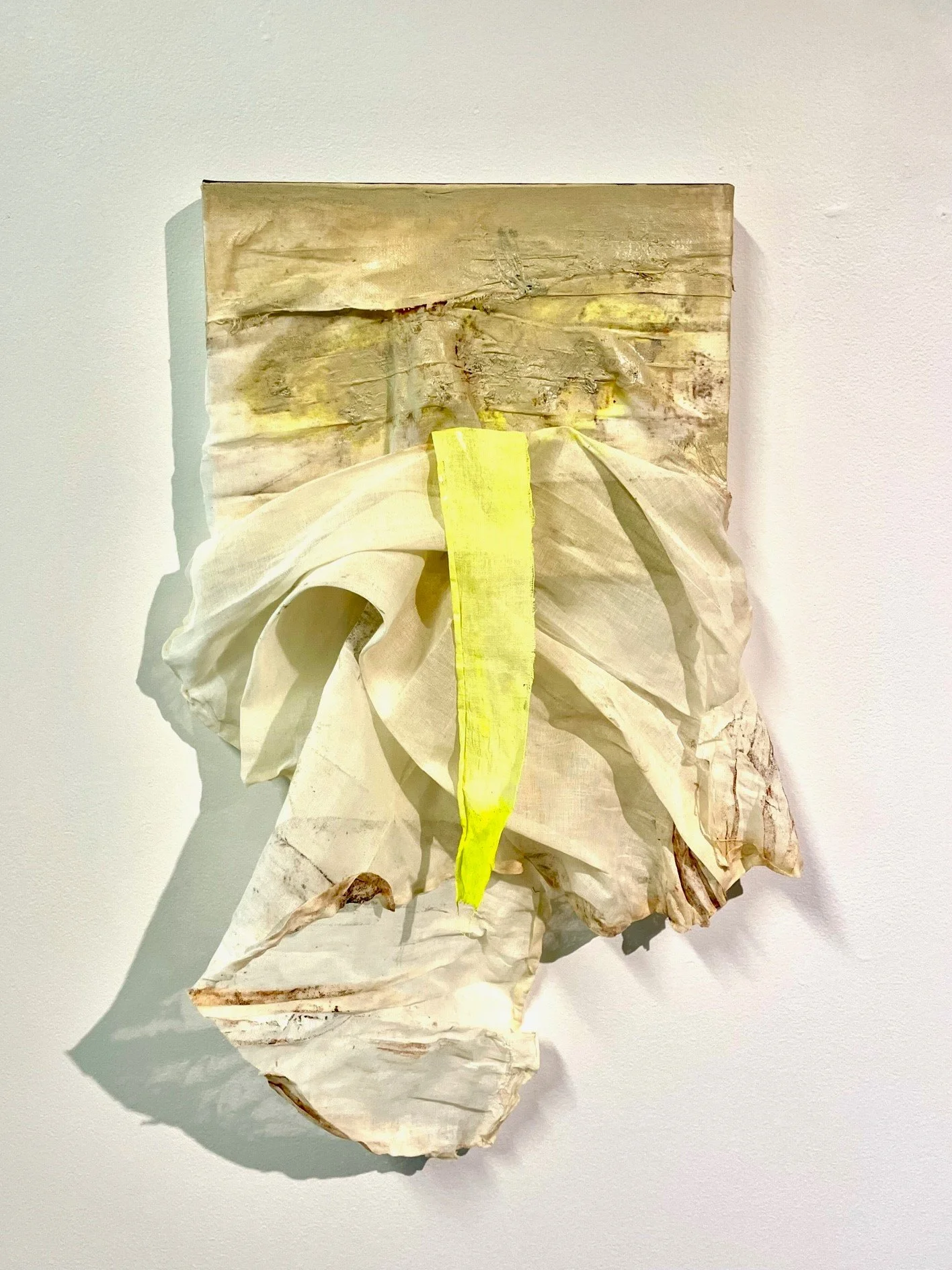
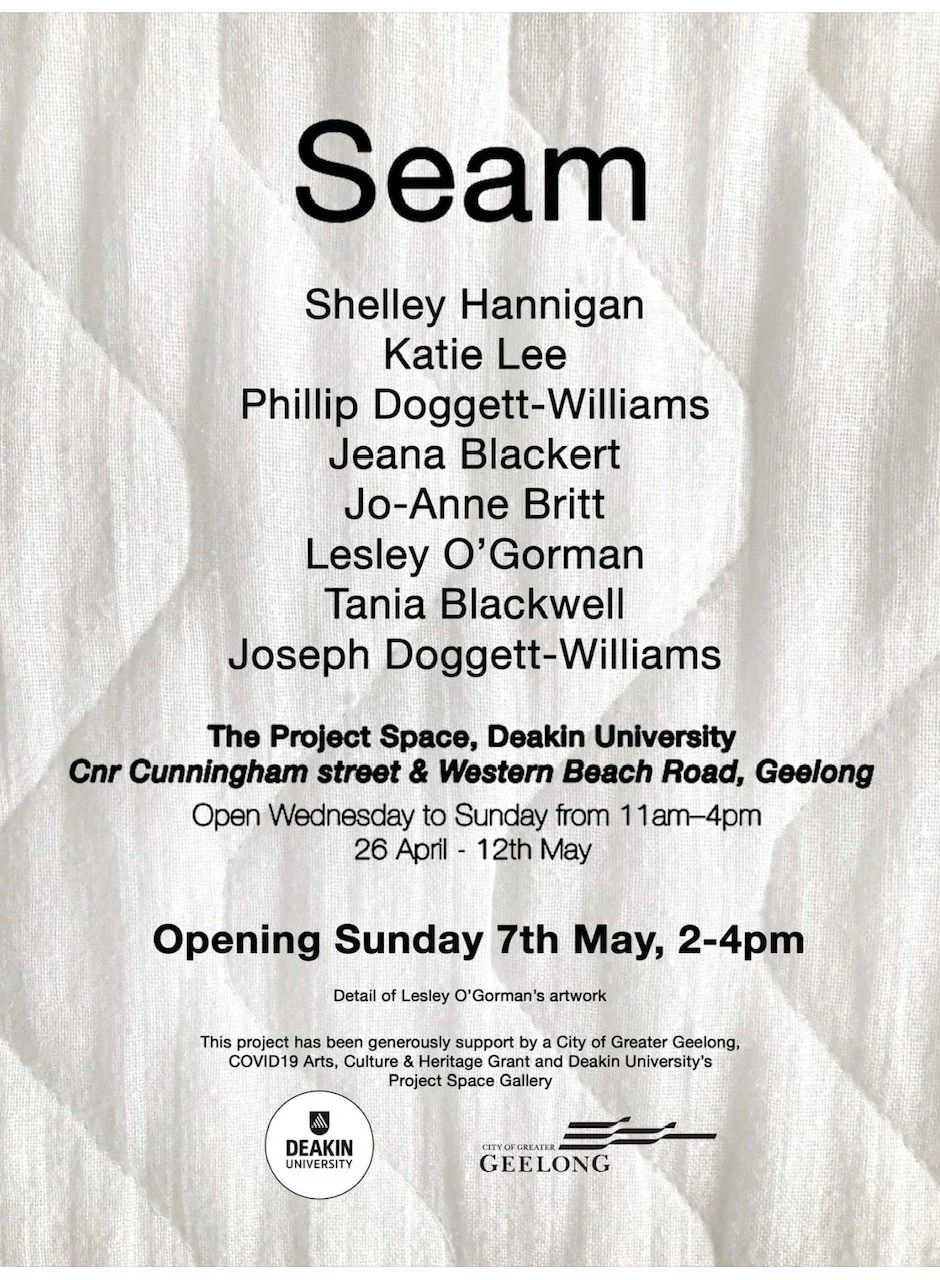
‘Veil’, Mixed media installation, Project Gallery, Geelong 2023
Batesford Limestone Quarry is located in the Moorabool River valley at Batesford, just outside Geelong. The limestone in this quarry formed during the Early to Middle Miocene, some 15 million years ago. It was thought that a tropical or semi-tropical sea covered this inland area at this time due to the rich fossilised elements discovered. These include lace corals, algae, and sea urchins, along with whales and sharks, from which an abundance of fossilised shark teeth has been found. The Fyansford Clay layer that lies over the limestone deposit is more recent and contains different fossil typologies due to the different water depths and conditions, these fossils include corals, molluscs, and the rare pearly nautilus (Pescott, 2017).
My interest in this site is based on revealing ecological trauma, deep matter, and the narratives within. Since colonial invasion, settler and convict ancestors have pillaged the landscape, creating deep open cuts in the landscape to extract mineral deposits that formed over 25,000 years leaving deep biological and cultural wounds. In the blink of an eye.
Drawing on the industrial heritage of Geelong and the Batesford Quarry my work explores the tension between the layers of the geological formations dating back to the Early to Middle Miocene. Loose but constrained, fragile yet strong, folded layers of whiteness move through the limestone curves. Through feminine sensibilities that reference the body, the landscape is covered in a white romantic veil as her form shifts and moves unconformably through deep time. Visibly revealing memories and stories through matter while remaining unseen.
Pescott, T. (2017). Birds and Botanists: A Field Naturalist’s History of Geelong. Belmont, Victoria.